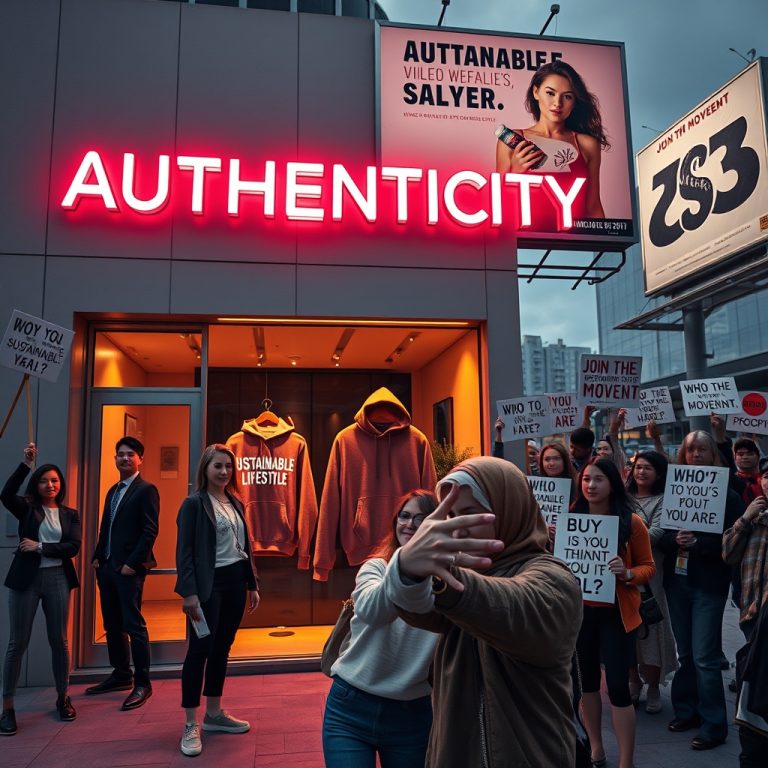

Oh, look—another brand just discovered its “purpose.” How revolutionary. It’s almost as if corporations spent decades selling us sugar water, fast fashion, and overpriced gadgets before suddenly realizing that maybe, just maybe, people might care about something deeper than a logo. Spoiler alert: they don’t. But that hasn’t stopped the endless parade of Brand Philosophy & Values manifestos, each more sanctimonious than the last.
Welcome to the golden age of corporate narcissism, where companies spend millions crafting identities that make them sound like your wise, eco-conscious grandma—only to turn around and lobby against the very regulations that would make their “values” more than just a marketing gimmick. But hey, at least their Instagram feeds are on-brand.
Brand Philosophy & Values: The Corporate Equivalent of a TED Talk
Remember when brands were just… brands? They sold products, made profits, and occasionally sponsored a sports team. Now, every company from your local artisanal soap maker to a multinational oil conglomerate has a mission. A why. A soul. Because apparently, selling things isn’t enough—now they have to save the world while doing it.
Take Patagonia, the poster child of doing well by doing good. Their brand philosophy? Saving the planet, one $200 fleece at a time. And good for them—until you realize that their entire business model relies on convincing you that buying more stuff (even if it’s “sustainable”) is the key to environmental salvation. It’s like a vegan burger joint telling you that eating there will end world hunger. Cute idea, but let’s not pretend capitalism and altruism are anything more than awkward bedfellows.
Then there’s Apple, the tech messiah that wants you to “Think Different”—as long as you’re thinking about which overpriced device to buy next. Their brand values? Innovation, simplicity, and a cult-like devotion to minimalist design. Never mind the fact that their supply chain has been linked to human rights abuses, or that their “innovation” mostly involves removing headphone jacks and selling dongles. But sure, let’s all pretend that buying an iPhone is a political statement.
When Brand Values Are Just Expensive Hall Monitors
Here’s the thing about brand philosophy & values: they’re not for you. They’re for the companies themselves. A well-crafted brand identity is like a corporate horoscope—vague enough to apply to anyone, yet specific enough to make you feel seen. “We believe in authenticity,” they say, while spending millions on focus groups to ensure every word of their mission statement is just manipulative enough.
And let’s talk about those core values. Integrity. Transparency. Empowerment. They sound great until you realize they’re about as meaningful as a participation trophy. A company can slap “sustainability” on a product while outsourcing its production to a sweatshop, and somehow, we’re supposed to applaud their commitment to the planet. It’s like a serial cheater wearing a “Loyalty” tattoo—sure, it’s there, but we all know it’s performative.
Then there’s the granddaddy of them all: purpose-driven branding. Because nothing says “we care” like a corporation that only discovered ethics after their quarterly profits dipped. Suddenly, every brand is a movement. Every purchase is a vote. Every logo is a lifestyle. And if you don’t buy in? Well, you’re not just a customer—you’re part of the problem.
The Illusion of Choice: Why We Keep Drinking the Kool-Aid
So why do we keep falling for it? Because brands aren’t just selling products anymore—they’re selling identity. In a world where social media has turned us all into walking billboards for our own personal brands, it’s only natural that we’d seek out companies that reflect the version of ourselves we want to project. Vegan? There’s a brand for that. Minimalist? Oh, you’ll love their aesthetic. Woke? Don’t worry, they’ve got a rainbow-colored logo and a statement about social justice ready to go.
And let’s not forget the ultimate irony: the more a brand preaches about authenticity, the less authentic it becomes. Real authenticity doesn’t come with a press release. It doesn’t come with a carefully curated Instagram feed. It doesn’t come with a CEO giving a TED Talk about how their company is changing the world. But hey, at least it makes for great content.
But here’s the kicker: we want to believe. We want to think that the $5 coffee we’re buying is somehow making the world a better place. We want to believe that the fast-fashion brand we’re shopping at really cares about ethical labor practices. We want to pretend that our purchasing power is some kind of superpower, capable of bending the moral arc of the universe toward justice.
When Brand Values Backfire: The Corporate Walk of Shame
Of course, not every brand gets away with it. Some try to jump on the values bandwagon and faceplant spectacularly. Remember when Pepsi thought it could solve police brutality with a Kendall Jenner commercial? Or when Gillette decided to lecture men about toxic masculinity, only to be met with a collective eye-roll from, well, men? These are the moments when the mask slips, and we’re reminded that brands aren’t our friends—they’re just really good at pretending to be.
And yet, even when they fail, they keep trying. Because in the end, brand philosophy & values aren’t about morality—they’re about money. They’re about differentiating yourself in a crowded market. They’re about turning customers into evangelists. They’re about making you feel like you’re part of something bigger than yourself, even if that something is just a really well-designed logo.
So the next time a brand starts waxing poetic about its core values, ask yourself: is this really about making the world a better place, or is it just about making me feel better about buying more stuff? The answer, more often than not, is the latter. But hey, at least their branding is on point.
And if you really want to make a difference? Maybe skip the virtue-signaling purchase and just… donate to a cause you actually care about. Or better yet, hold these brands accountable when their actions don’t match their words. Because the only thing more powerful than a brand’s philosophy is a consumer who refuses to be fooled by it.
About the Author