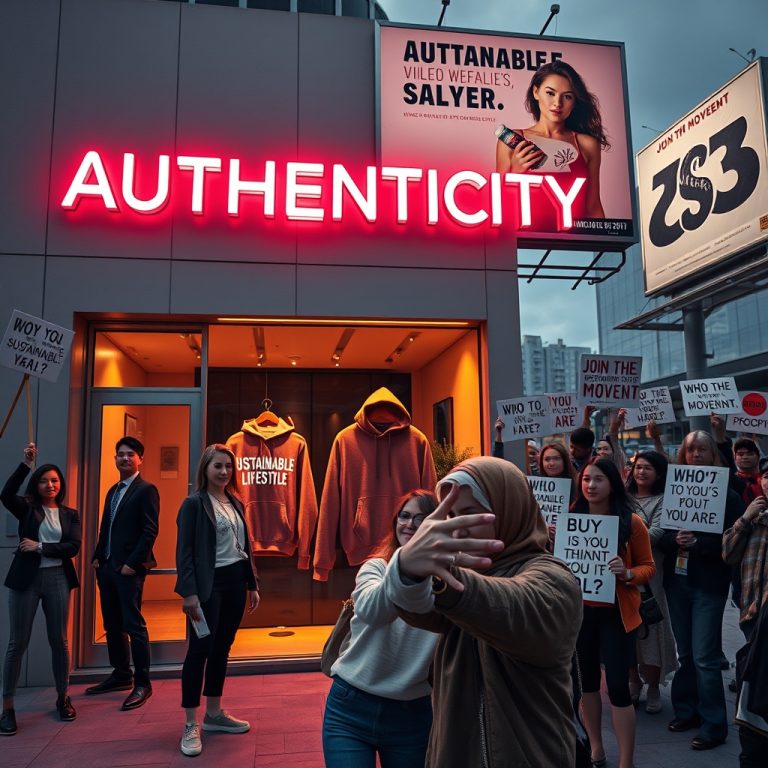

Oh, look—another brand just discovered its “core values.” How revolutionary. You’d think they’d unearthed the secret to eternal youth, not a list of buzzwords they paid a consultant six figures to regurgitate. But here we are, in the golden age of brand philosophy & values, where every company from your local artisanal toast café to a multinational conglomerate has a “mission” so vague it could apply to a lemonade stand or a cult. Spoiler: It’s usually both.
Why Your Brand’s “Why” Is Probably Just Corporate Nonsense
Let’s get one thing straight: Most brands don’t have a philosophy. They have a vibe. A carefully curated aesthetic designed to make you forget they’re just trying to sell you something. That “authentic” coffee brand with the handwritten font and the tagline “Brewed with Love”? Yeah, the love is for your wallet. The “disruptive” tech startup that claims to “empower humanity”? They’re empowering their IPO, not your soul.
But sure, let’s pretend that brand identity is more than just a logo and a color palette. Let’s pretend that when a company says it “stands for innovation,” it’s not just because they Googled “what do millennials like” and landed on a Medium article from 2017. The truth is, most brands adopt a philosophy the way a chameleon adopts a new color—because it’s convenient, not because it’s meaningful.
The Art of Sounding Deep While Saying Nothing
Ah, the corporate mission statement—a literary genre where words go to die. These masterpieces of ambiguity are designed to sound profound while committing to nothing. Take, for example, the classic: “We exist to make the world a better place.” Wow. Groundbreaking. Do you also exist to breathe oxygen? Because that’s about as specific as this gets.
Then there’s the ever-popular “customer-first” mantra. Because nothing says “we care” like a 45-minute hold time and a chatbot named “Jen” who may or may not be a real person. Brands love to preach about core values like transparency, integrity, and accountability—right up until they’re caught in a scandal. Then suddenly, those values are «under review.» How convenient.
And let’s not forget the granddaddy of all corporate platitudes: “People are our greatest asset.” Oh, really? Then why does your HR department treat them like replaceable cogs in a machine that exists solely to enrich shareholders? If people were truly your greatest asset, you’d pay them enough to afford the products they’re selling. But no, let’s just slap that phrase on a poster in the break room and call it a day.
When Brand Values Become a Punchline
Nothing exposes the hollowness of brand philosophy & values like a PR crisis. Remember when that fast-food chain claimed to “serve with pride” right before a video of their employees spitting in the food went viral? Or when that eco-friendly clothing brand got busted for dumping toxic waste into a river? Suddenly, their «sustainability» values weren’t looking so sustainable.
Brands love to virtue-signal until the moment virtue becomes inconvenient. Then it’s all, “Well, we never said we were perfect!” No, but you did say you were “driven by purpose,” which, apparently, is code for “we’ll say anything to move product.” The disconnect between what brands preach and what they practice is so glaring it’s a wonder we don’t need sunglasses just to read their About Us page.
How to Spot a Brand That Actually Gives a Damn (Spoiler: It’s Rare)
So, how do you separate the brands that genuinely embody their brand identity from the ones just slapping words on a website? Here’s a pro tip: Look at their actions, not their adjectives. A brand that truly values sustainability doesn’t just sell “eco-friendly” products—it ensures its supply chain isn’t exploiting workers or destroying the planet. A brand that claims to put customers first doesn’t hide its customer service number behind 17 layers of FAQ pages.
Another red flag? Overuse of the word “passion.” If a brand’s mission statement includes “passion” more than once, run. Passion is what you feel for your dog, your hobby, or your significant other—not for “leveraging synergies to maximize shareholder value.” Brands that actually care don’t need to remind you every five seconds. Their actions do the talking.
The One Value Every Brand Forgets: Honesty
Imagine if a brand’s core values included something radical, like “We’ll never lie to you.” Or “We admit when we’re wrong.” Or even, “We’re in this to make money, but we’ll try not to be complete jerks about it.” That would be refreshing. Instead, we get brands tripping over themselves to prove how “woke” they are, only to backpedal the second they face backlash. Remember when companies changed their logos to rainbows for Pride Month, then donated to anti-LGBTQ+ politicians the other 11 months of the year? Yeah, that’s not allyship—that’s performative nonsense.
Honesty is the one value no brand seems to want. Because honesty would mean admitting that most of their brand philosophy & values are just marketing fluff designed to make you feel good while you hand over your credit card. And that’s not a great sales pitch, is it?
So, What’s the Point of All This Corporate Posturing?
Here’s the thing: Brands don’t adopt a philosophy because they’re suddenly enlightened. They do it because they’ve been told it’s good for business. Studies show that consumers—especially younger ones—prefer brands with a “purpose.” So, naturally, brands have responded by slapping a purpose on everything like it’s a participation trophy. The result? A sea of sameness where every company claims to be “innovative,” “customer-centric,” and “driven by integrity,” yet none of them stand out because none of them are saying anything real.
The irony is that the brands that do stand out are the ones that don’t try so hard. The ones that admit they’re in it to make money but still treat their employees and customers with respect. The ones that don’t pretend to be saving the world but still manage to make a decent product. The ones that understand that brand identity isn’t about lofty ideals—it’s about consistency, reliability, and, yes, a little bit of honesty.
So, the next time you see a brand’s mission statement, ask yourself: Is this inspiring, or is it just corporate Mad Libs? Because if it sounds like it was written by a committee of people who’ve never met a human outside of a focus group, it probably was. And if that’s the case, maybe it’s time to demand more than just pretty words. Maybe it’s time to demand a little substance. Or at least a better class of buzzwords.
About the Author